

License # 1141430
 We’re open 7 days a week, 8 AM–8 PM
 License # 1141430
We’re open 7 days a week, 8 AM–8 PM Orange County pergola permit guide
Do Pergolas Require a Permit in Orange County?
If you are searching for pergola permit Orange County, the short answer is this: many pergola projects in Orange County should be treated as permit questions first, not design questions first.
The difference is that Orange County is not one city with one single permit path. It is a group of cities, and the details can vary depending on where the property is located. That is why the smartest Orange County answer is not “yes” or “no” in the abstract. It is: understand the California baseline first, then check how the actual city treats patio covers, pergolas, setbacks, plans, and inspections.
Official city pages already show why that matters. Irvine states that the common detached accessory-structure exception does not apply to patio covers, which are subject to permit regardless of size. Huntington Beach states that building permits are required for patio covers. Newport Beach publishes standard attached patio cover plans and treats permit, plan check, and inspection as part of the normal construction process.
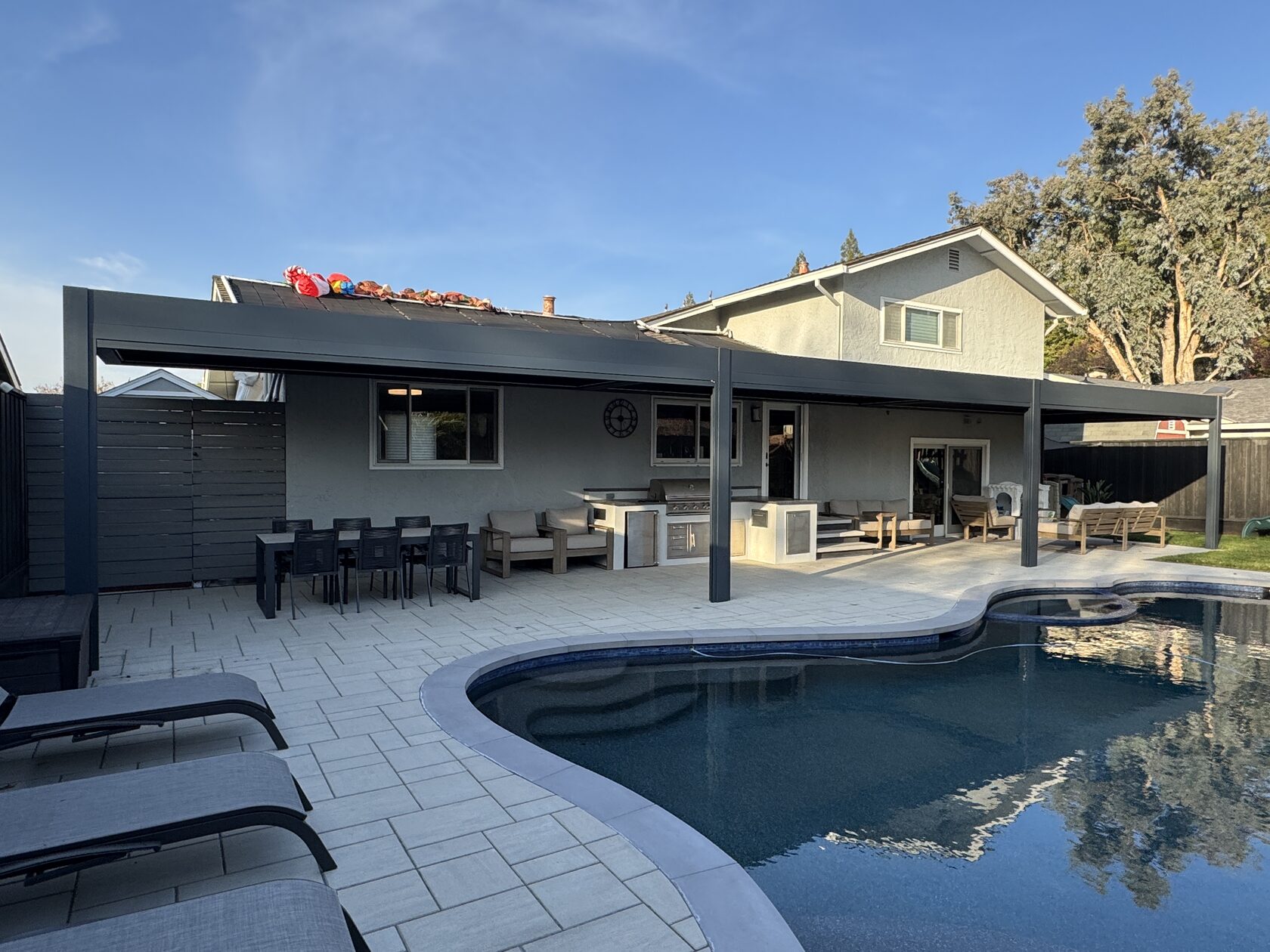
Quick decision guide
Usually permit-related: attached pergolas, patio-cover-style structures, utility-connected builds, and projects with permanent footings.
Closer to exempt territory: small detached utility-free accessory structures, but city review still matters.
Most important takeaway: “small” is not the same thing as “approved.”
Need help with design, engineering, and permit preparation?
A turnkey team can help define the structure correctly, prepare drawings, coordinate engineering, and align the package with the city’s review path.
Request a QuoteShort Answer: When a Pergola Usually Needs a Permit in Orange County
As a practical rule, the answer is usually yes when the pergola is attached to the house, built with permanent footings, includes electrical or other utilities, or behaves more like a patio cover or engineered outdoor-living structure than a simple decorative pergola.
A pergola may be closer to permit-exempt territory when it is a small, detached, utility-free accessory structure. But city-level review still matters. Irvine is especially clear here: yes, there is the familiar detached accessory-structure language under one hundred twenty square feet, but patio covers are still subject to permit regardless of size.
That is why “small” is not the same thing as “approved.”
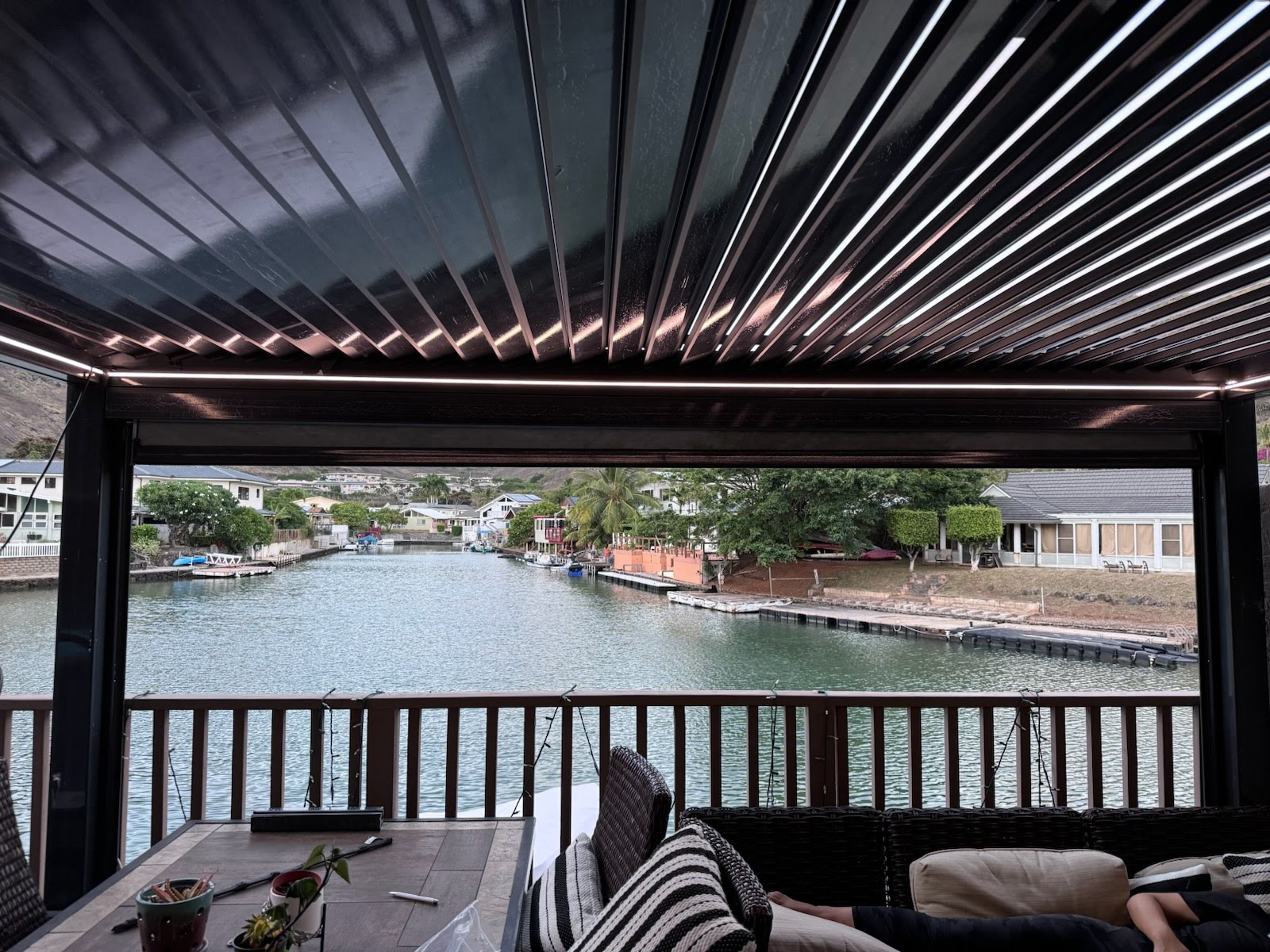
| Project condition | Typical permit direction | Why it matters |
|---|---|---|
| Attached to the house | Usually permit-related | It is more likely to affect structure, waterproofing, and load transfer. |
| Permanent footings or engineered supports | Usually permit-related | The project behaves more like formal construction than a simple backyard structure. |
| Electrical, gas, plumbing, fans, heaters, outlets | Usually permit-related | Utilities move the project beyond a structure-only installation. |
| Small detached utility-free structure | Sometimes closer to exempt territory | Even then, local city treatment, zoning, and product type still matter. |
| Patio-cover or louvered-roof-style system | Often yes | Cities usually respond to what the structure does, not just what the homeowner calls it. |
Most likely to trigger review
Attached pergolas, patio covers, engineered outdoor-living structures, and builds with utilities.
Most commonly misunderstood
The California under-120-square-foot baseline is often treated as broader than it really is.
Best practical mindset
Check permit logic first, then design around the real city workflow and site conditions.
California Rules First: The Baseline Most Homeowners Misread
Across California, many official city pages use the same basic exemption language for small detached accessory structures under one hundred twenty square feet. Irvine’s official “Permits Not Required” page shows that language clearly. But it also shows the limitation homeowners often miss: patio covers are subject to permit regardless of size.
That means the California baseline is only the starting point. It tells you that some detached, utility-free structures may be treated differently. It does not mean every small pergola is automatically exempt, and it does not override local setback, zoning, planning, or product-type distinctions.
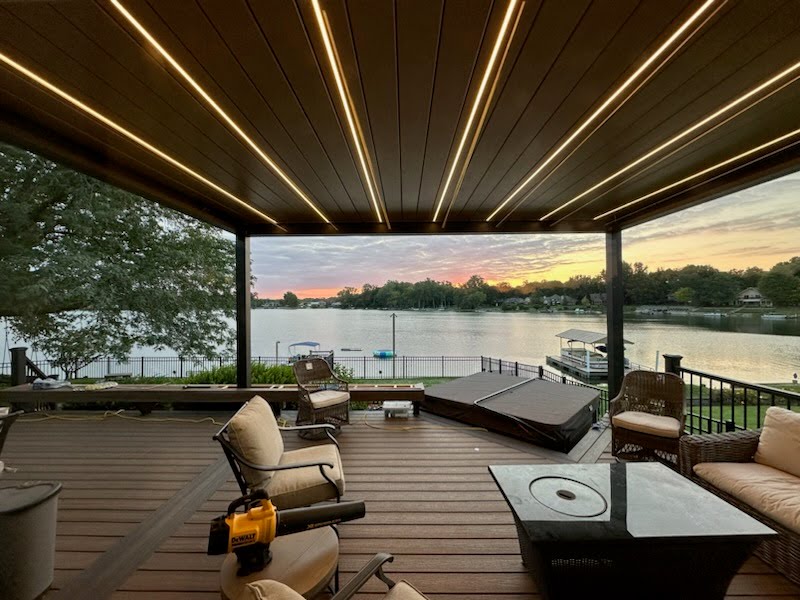
California baseline in one sentence
A small detached structure may sometimes be treated differently, but that does not automatically exempt every pergola from permit review.
What Orange County Adds on Top of California Rules
Orange County permit logic is more city-specific than Los Angeles’s single-department model.
For example:
- Irvine publishes a dedicated page for adding or replacing a residential patio cover or gazebo and provides setback standards, submittal guidance, and engineering notes.
- Huntington Beach states that building permits are required to erect, enlarge, alter, remove, demolish, or repair a structure, and it specifically lists patio covers as permit-required work.
- Newport Beach treats permits, plan checks, and inspections as a normal construction workflow and publishes standard attached patio cover plans.
So when a homeowner asks, “Do I need a permit for a pergola in Orange County?” the honest answer is: very often yes, but you need to verify it through the actual city’s rules and process.
Why Orange County is not a one-line answer
- It is a group of cities, not one unified permit path.
- Patio covers and pergolas may be treated differently by city.
- Setbacks, plans, inspections, and engineering notes can vary by jurisdiction.
Attached Pergola vs. Freestanding Pergola: Why It Still Matters
Just as in Los Angeles, attached pergolas in Orange County are more likely to trigger formal review than freestanding pergolas.
Once a pergola ties into the home, the project becomes more likely to affect structure, waterproofing, and load transfer. That moves it away from the category of “simple backyard structure” and toward real permitted construction.
Freestanding pergolas can still be treated differently, especially when they are smaller and simpler. But once the project becomes larger, permanently anchored, utility-connected, or more engineered, the permit question becomes much more serious.
Irvine’s patio cover and gazebo rules reinforce how much structure type matters. The city distinguishes among solid roof, open-lattice, louvered, non-retractable fabric, and retractable fabric types for setback purposes. That alone shows that the actual structure type matters, not just the label.
When Utilities Trigger Additional Permits — and Why the Label Matters
When utilities trigger additional permits
Even a pergola that begins as a simple frame can move into clear permit territory once you add lighting, fans, heaters, outlets, gas, or plumbing.
That matters even more for modern pergola systems with integrated electrical and comfort features. The moment a project includes utilities, it becomes more than a structure-only installation.
Huntington Beach’s permit workflow reinforces that point by tying permit handling and requirements to the valuation and the involvement of plumbing, mechanical, and electrical scope.
Pergola, patio cover, or louvered roof?
One reason Orange County homeowners get confused is that they use the word pergola for very different products.
An open trellis is one thing. A patio cover is another. A motorized louvered pergola with drainage, lighting, and screens is something else again. In practice, cities usually respond to what the structure actually does, not just what the homeowner calls it.
Irvine’s official patio cover and gazebo page is especially useful because it distinguishes among structure types and applies different setback logic depending on the roof or covering type. That is exactly why one blanket answer for “pergolas” is often misleading.
Common trigger points
- Lighting, fans, heaters, outlets
- Gas or plumbing scope
- Louvered, solid-roof, or retractable systems
- Drainage and weather-control features
How to Check If Your Orange County Pergola Needs a Permit
Start with the city.
Unlike Los Angeles, Orange County does not have one single citywide permit authority for all properties. First identify which city has jurisdiction over the parcel. Then define the structure clearly:
- Is it attached or freestanding?
- Is it open-lattice, solid roof, louvered, or retractable?
- Will it include lights, fans, heaters, or other utilities?
- Will it use slab anchoring, footings, or more engineered support?
Then follow the city’s actual workflow. Irvine points homeowners to setback standards, site plan requirements, drawings, and engineering notes. Huntington Beach explains the permit issuance path and notes that preparation requirements may take time depending on the project. Newport Beach provides plan-check and standard-plan resources that fit this same overall logic.
Best workflow
- Identify the city with jurisdiction
- Define the structure precisely
- Check setbacks and planning conditions
- Prepare drawings and site details early
What Documents and Information You’ll Usually Need
At minimum, most Orange County pergola permit reviews revolve around:
- a site plan showing the pergola location
- dimensions and distances to property lines
- setback information
- construction drawings or product details
- footing or anchoring information
- utility scope if electrical, gas, or plumbing are involved
Irvine is especially explicit here: its patio cover and gazebo guidance points applicants to site plans, construction drawings, and additional engineering-related requirements depending on the structure.
That is one reason homeowners benefit from working with a team that can coordinate design, engineering, and permit preparation instead of trying to guess the submittal package alone.
Typical submittal package
A city will usually want to know where the pergola goes, how big it is, how close it is to property lines, how it is built, and whether utilities are part of the scope.
Common Permit Mistakes Orange County Homeowners Make
The most common mistake is assuming that the common California 120-square-foot detached-structure baseline answers the question by itself. It does not. Official city pages show that local rules still matter, and Irvine explicitly states that patio covers are subject to permit regardless of size.
The second mistake is treating an attached pergola like a detached backyard structure. Once the pergola connects to the house, permit review becomes more likely.
The third mistake is ignoring setback and zoning conditions. Irvine’s own patio cover / gazebo guidance shows how structure type changes review and setbacks.
The fourth mistake is forgetting that HOA approval and city permit review are separate processes. Irvine explicitly tells applicants to verify HOA requirements where applicable.
How California Pergola Systems Simplifies the Permit Process
This is where a turnkey process becomes valuable.
Most homeowners are not really looking for a code lecture. They are trying to figure out how to get the pergola designed correctly, approved correctly, and installed without expensive surprises. In Orange County, that usually means defining the structure type early, checking city-specific requirements, preparing the right drawings, handling engineering if necessary, and submitting a complete package that aligns with the city’s review path.
A company that can coordinate design, engineering, permits, fabrication, and installation is answering the actual homeowner problem — not just the permit question on paper.
Learn more about California Pergola Systems or request a project consultation to discuss layout, structure type, engineering, and permit preparation.
Need a permit-minded pergola plan?
A coordinated process can help align design, engineering, drawings, permit preparation, fabrication, and installation from the start.
Talk to the TeamFAQ
Do pergolas require a permit in Orange County?
Often, yes. Many Orange County pergola projects should be treated as permit questions first, especially when they are attached, utility-connected, larger, or function more like patio covers than simple decorative structures. Official city pages from Irvine, Huntington Beach, and Newport Beach all point toward formal permit logic for patio-cover-type work.
Is a pergola under 120 square feet permit-exempt in California?
Sometimes a small detached accessory structure may be treated differently under common California language, but that does not automatically remove zoning or local planning requirements. And in Irvine, patio covers are subject to permit regardless of size.
Do attached pergolas need a permit?
They are much more likely to. Once a pergola is attached to the house, it usually becomes part of a more formal review path.
Do I need a permit for a pergola with lights or a fan?
You should usually expect a more formal permit path once electrical is involved. Utilities change the project from a simple frame into a more integrated structure.
Are pergola permit rules the same in every Orange County city?
No. Orange County rules vary by city. Irvine, Huntington Beach, and Newport Beach each show their own process and emphasis, which is why local review matters so much.
Does HOA approval replace a city permit?
No. HOA approval and city permits are separate. Irvine specifically indicates that applicants should verify HOA procedures where applicable in addition to city requirements.
Final Word
If you are asking whether pergolas require a permit in Orange County, the safest and most useful answer is this: some small detached structures may qualify differently under common California baseline rules, but Orange County homeowners should never assume exemption without checking the actual city, the structure type, the utilities, and the site conditions first.
The more the project behaves like a real outdoor-living structure, the more likely permit review becomes.
And that is exactly where a full-service team has a real advantage: not just in building the pergola, but in helping the homeowner move through design, engineering, permits, fabrication, and installation as one coordinated process.
Ready to plan your pergola the right way?
Start with the structure type, the city workflow, and a complete design-and-permit package that fits the property from day one.
Request My Consultation